

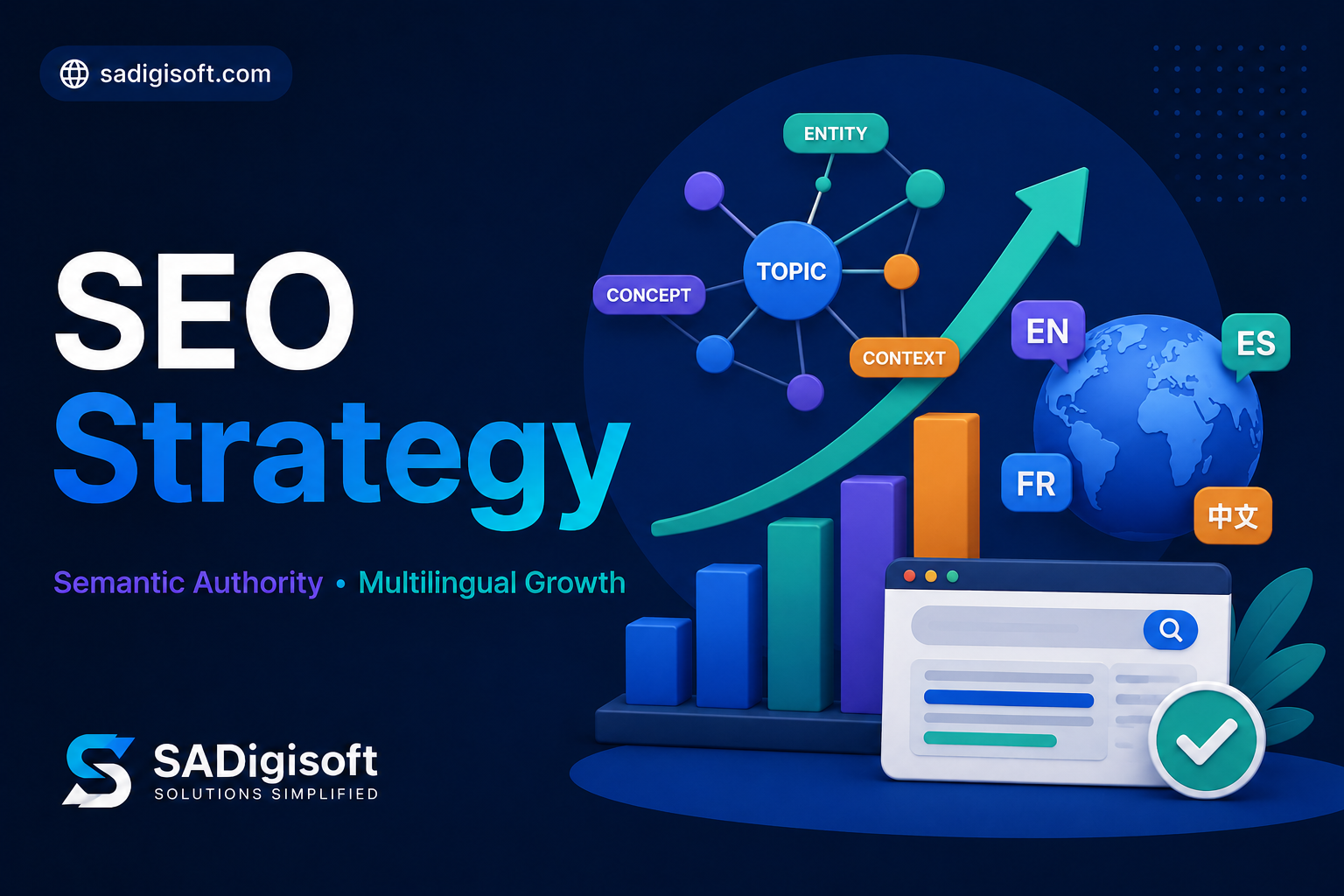
Building Topical Authority to Dominate AI-Powered Search Results
Search engine optimization in 2026 looks fundamentally different from the keyword-driven playbooks marketers relied on just four years ago. The shift is not just incremental — it is structural. Google, Bing, and a growing list of AI-powered answer engines now evaluate content through the lens of semantic authority: how deeply your content establishes a site as a trustworthy, comprehensive source on a specific topic cluster.
What Is Semantic Authority?
Semantic authority is a search engine's measure of how comprehensively and accurately a website covers a particular domain of knowledge. Unlike traditional domain authority — which is largely a proxy for the quantity and quality of inbound links — semantic authority is computed from the richness, coherence, and cross-entity relationships within a site's content.
Google's Knowledge Graph now underpins almost every search result. When users search for "best cloud hosting provider," the engine doesn't just look for pages that contain those words. It identifies the entities involved (SAP, AWS, GCP), their relationships to adjacent concepts (SLA, uptime, CDN), and maps your page's coverage against the expected knowledge graph for that topic cluster.
"Content without semantic depth is like a map without roads — it shows the territory but provides no way to navigate it."
— SADigisoft SEO Research Team, 2025
The Four Pillars of Semantic SEO Success in 2026
1. Topic Clusters Over Keyword Silos
The pillar-cluster model — where a comprehensive "pillar" page sits at the center of dozens of tightly interlinked cluster pages — is now the baseline expectation, not a differentiator. What separates top performers in 2026 is depth and velocity: publishing new cluster content regularly enough that search engines recognize your site as an active, authoritative source.
To build semantic authority, your cluster architecture should:
- Cover every major sub-topic within a domain with dedicated pages
- Link bidirectionally between cluster pages and the pillar
- Update content regularly with new data, case examples, or expanded sections
- Use consistent entity language — don't alternate between "CRM software" and "customer relationship tool" arbitrarily
2. Answer Engine Optimization (AEO)
The fastest growing traffic source in 2025-2026 is not traditional blue-link search — it is AI-powered answer interfaces. ChatGPT Search, Google AI Overviews, Perplexity, and Bing Copilot now handle a significant portion of informational queries without ever sending users to a website. For brands, this is both a threat and an opportunity.
AEO is the discipline of structuring your content so that large language models cite it confidently. Key tactics include:
- Answer-first structure: State the direct answer within the first 40 words, then expand
- FAQ schema markup: Every information-dense page should use FAQPage JSON-LD
- Definitive statements: LLMs prefer declarative sentences over hedging language
- Primary research: Original statistics and data points are cited at disproportionately high rates
3. Entity Establishment
Search engines build entity profiles for organizations. Your site's entity profile encompasses your verified business name, address, NAP consistency across the web, mentions on authoritative third-party sites, and your Knowledge Panel data. Building a strong entity presence means:
- Claiming and verifying your Google Business Profile
- Publishing structured data with Organization, WebSite, and LocalBusiness schema
- Earning editorial mentions on industry publications and news sites
- Ensuring absolute NAP consistency across 50+ citation sources
4. Content Experience Signals
Google's ranking systems increasingly incorporate behavioral signals as proxies for relevance and quality. Pages with strong dwell time, low bounce rates (on informational intent queries), and high scroll depth send positive expertise signals. In practice, this means:
- Formatting long-form content with clear scannable headers
- Including visual assets (tables, charts, images) to break up text walls
- Embedding related internal links early so users explore further
- Ensuring page speed scores above 90 on Core Web Vitals
AI-Generated Content: The Double-Edged Sword
The proliferation of AI content tools has flooded the web with mediocre, generic articles. Paradoxically, this has made high-quality, experience-driven content more valuable. Google's EEAT framework (Experience, Expertise, Authoritativeness, Trustworthiness) now specifically rewards first-hand experiential content that AI tools cannot produce at scale.
Agencies and in-house teams that win in 2026 are using AI to accelerate research and drafting, then layering in primary data, client testimonials, expert interviews, and proprietary insights that only their organization can provide.
Practical Implementation Checklist for 2026
- Conduct a full content audit and map every page to a semantic cluster
- Add FAQ schema to all service and blog pages
- Publish at least two new cluster articles per week
- Establish a link-building strategy targeting contextually relevant editorial placements
- Monitor AI Overview appearances for your key queries and optimize accordingly
- Run quarterly Core Web Vitals audits and fix LCP/CLS issues
The Competitive Landscape
The brands winning in search in 2026 are not those who publish the most — they are those who have built the deepest, most interconnected content ecosystems in their niche. The barrier to entry has risen, but so has the longevity of results for those who invest seriously in semantic SEO infrastructure.
For businesses in competitive verticals, partnering with an experienced SEO team who understands both technical fundamentals and the emerging AI search landscape is no longer optional — it is essential for sustainable organic growth.
Summary
Semantic authority is the central organizing principle of SEO in 2026. By building deep topic clusters, optimizing for answer engines, establishing a strong entity profile, and delivering outstanding content experiences, your brand can achieve durable search visibility that withstands algorithm shifts and the rise of AI-powered search interfaces.
Sources & Further Reading:
Google Search Central Documentation ·
Moz SEO Blog ·
Search Engine Land
Turn this article into a practical action plan
If this topic affects your site, campaign, or LMS growth path, we can help translate it into changes that actually fit your current setup.
Discuss This TopicFollow the related journey
Use the article as one step, then move into the service, portfolio, or broader blog context around it.