

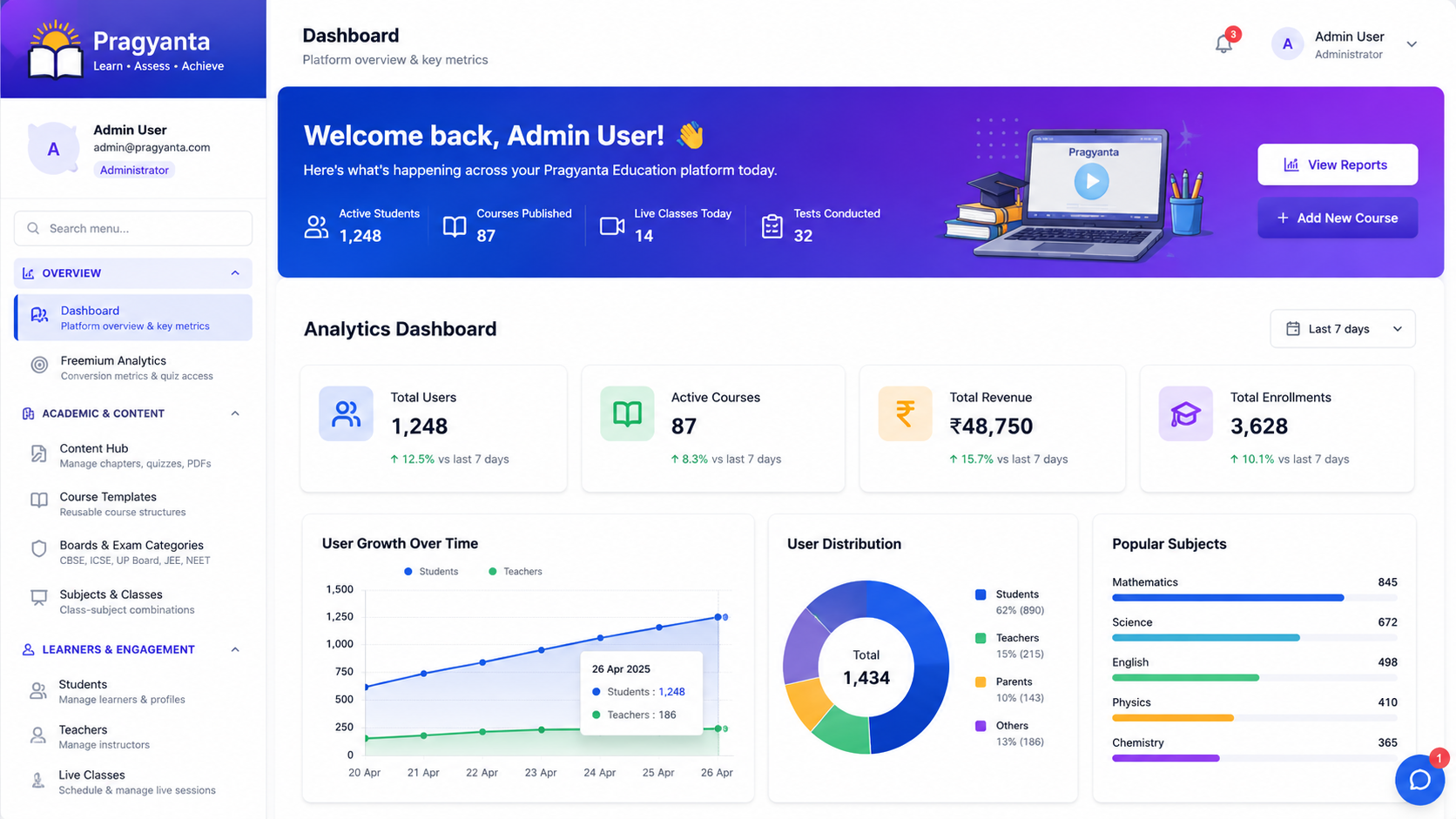

When teams build only around the first interface they see, the product often becomes tightly coupled to one screen, one frontend, and one narrow workflow. API-first development changes that. It forces the team to think about the product as a system of capabilities, not only as a set of pages.
What API-first really means
API-first does not mean the API is built in isolation while product thinking waits elsewhere. It means the backend contract is designed as a first-class product layer from the beginning. The frontend, admin tools, partner integrations, and even future apps all benefit from that discipline.
Why it helps web platforms scale
- Multiple interfaces can share one backend truth - web app, admin panel, partner portal, and mobile clients can evolve more cleanly.
- Integrations are easier to support - because the platform is already structured around capabilities, not one-off page logic.
- Frontend work becomes more flexible - UI changes do not need to restructure the whole backend every time.
- The product becomes easier to reason about - because responsibilities are clearer across layers.
Where teams usually miss the point
Some teams hear API-first and build over-abstracted interfaces nobody really needs yet. The better version is more practical: define the important business capabilities clearly enough that future screens and integrations can reuse them without turning the system into duplication.
Why this matters commercially
API-first thinking often reduces rework. New dashboards, partner access, internal tooling, and future product extensions can move faster because the platform already exposes useful capabilities in a structured way. That makes iteration cheaper and expansion more realistic.
Final thought
API-first product development is not about building for every imaginary future. It is about avoiding the common mistake of making today's interface the prison for tomorrow's product.
Sources & Further Reading:
Google Search Central Documentation ·
Moz SEO Blog ·
Search Engine Land
Turn this article into a practical action plan
If this topic affects your site, campaign, or LMS growth path, we can help translate it into changes that actually fit your current setup.
Discuss This TopicFollow the related journey
Use the article as one step, then move into the service, portfolio, or broader blog context around it.