

Service at a glance
RAG · FastAPI · OpenAI · pgvector · Postgres
AI you can actually trust in production
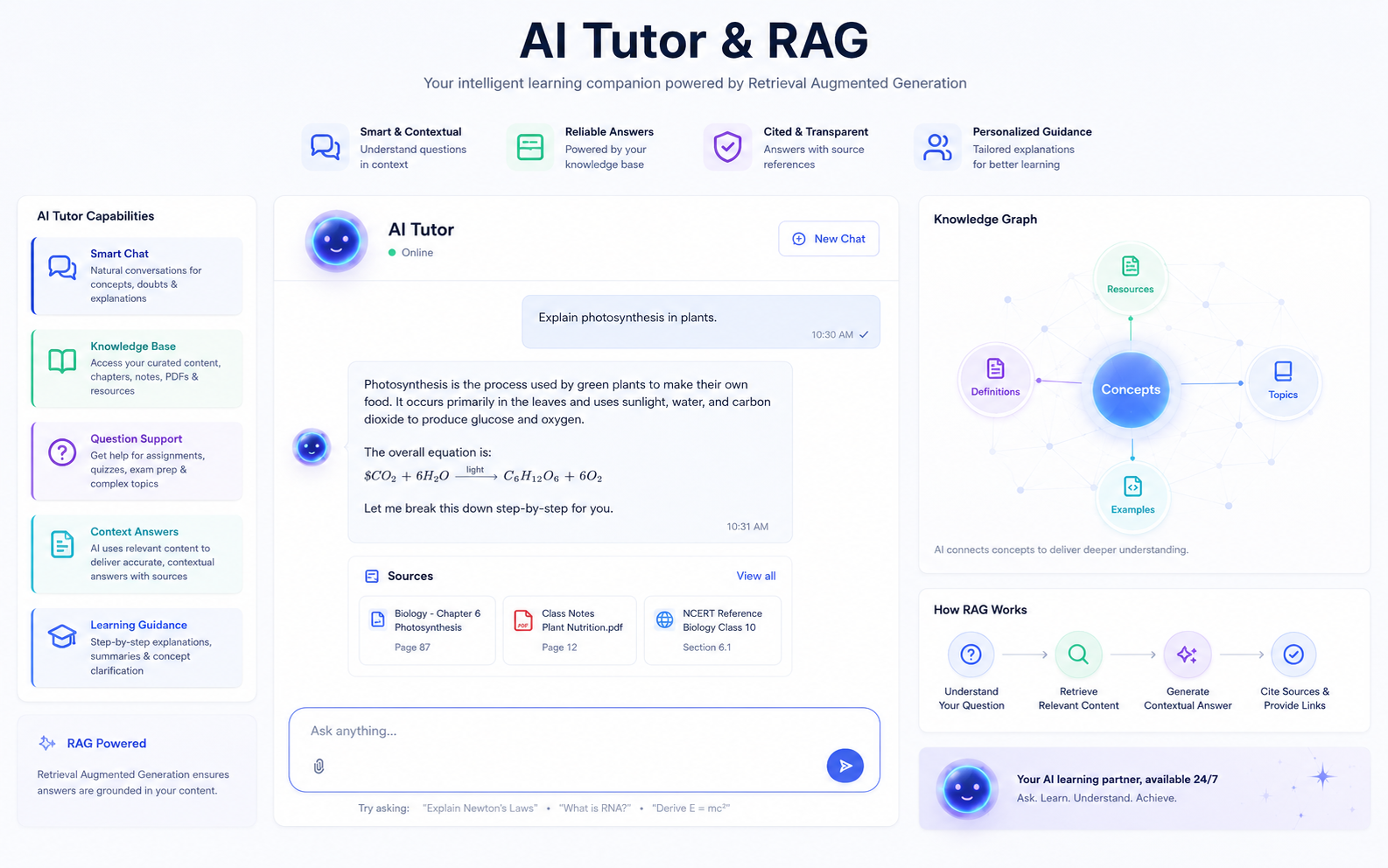
A raw chatbot invents answers. We build retrieval-augmented (RAG) assistants that retrieve the relevant facts from your content first, then answer from those — accurate, on-topic and traceable.
What we build
- Ingestion pipelines that chunk and embed your docs, courses and data
- Retrieval on Postgres/pgvector, with guardrails to stay on-topic
- FastAPI + OpenAI answer generation, embedded in your app as a chat panel
- Monitoring so you can see what was asked and answered
Who it's for
Products, platforms and support teams that want instant, reliable answers from their own knowledge base — without hallucinations.
Recommended reading
- API-First Product Development for Web Platforms
- Why We Build with React, FastAPI and PostgreSQL
- Building LMS and SaaS Platforms with React and FastAPI
Why retrieval, not fine-tuning
Fine-tuning bakes a snapshot of your content into the model itself — it goes stale the moment your content changes, and it still can't tell you which document an answer came from. Retrieval keeps the model and your content separate: update the source content and the assistant's answers update with it, and every answer can be traced back to the passage it was pulled from. That traceability is what makes a RAG assistant something you can actually put in front of customers or students, rather than a demo you have to caveat.
How we work
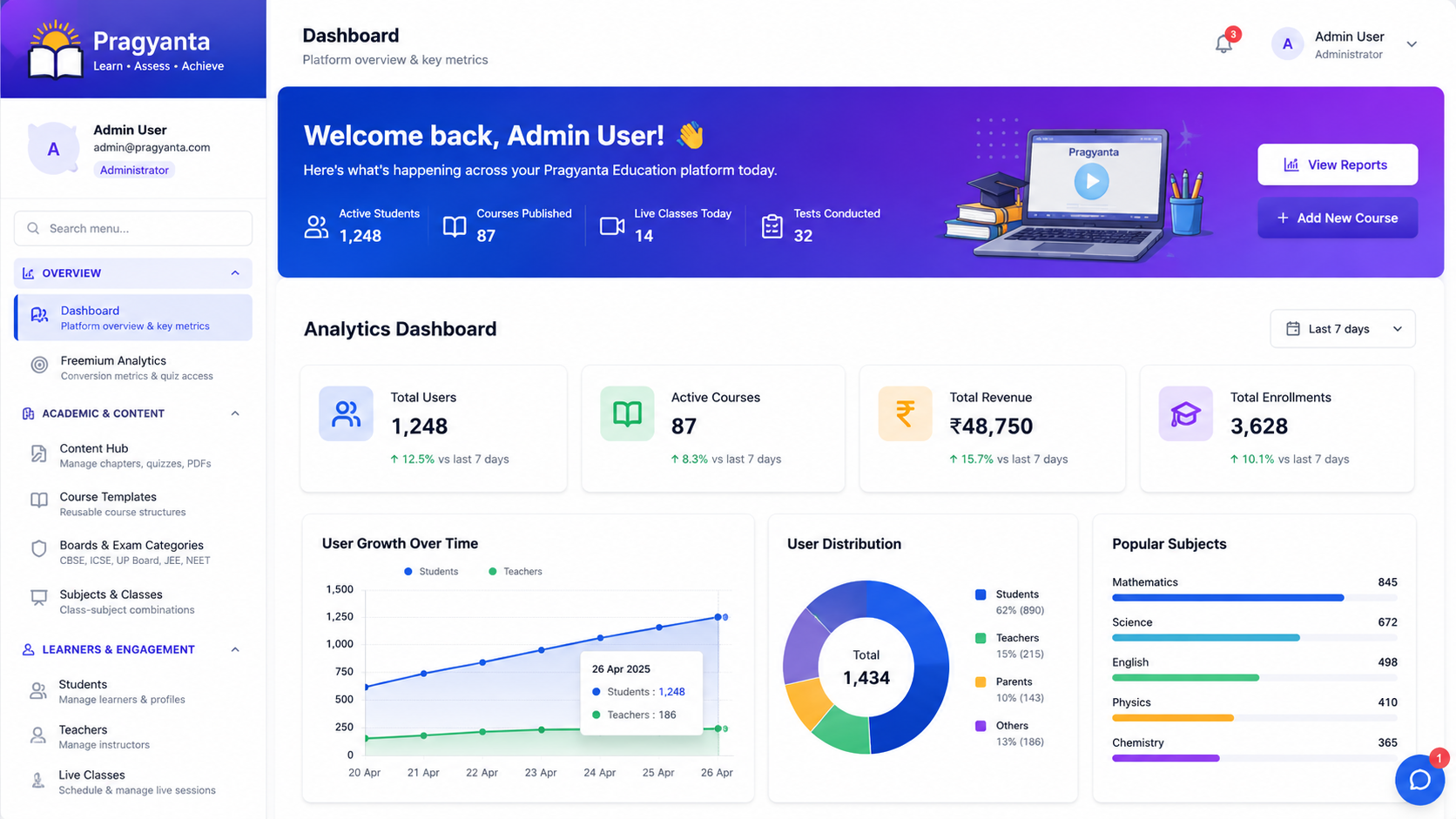
We proved this pattern on our AI-tutor demo inside Pragyanta. The same approach drops into any product — see Custom Web Platforms.
Questions we get asked
How do you stop the assistant from making things up?
By design, not by hoping — it retrieves the relevant passages from your own content before generating an answer, and is instructed to answer only from what it retrieved. Where nothing relevant is found, it says so rather than guessing.
What content can the assistant actually search?
Whatever you give it access to — documentation, course content, a knowledge base, support articles — ingested through a pipeline that chunks and embeds it into Postgres/pgvector for retrieval.
Do we need our own OpenAI account, or is that included?
We scope this during the initial conversation — some clients prefer to hold their own API key and billing relationship, others prefer it managed as part of the build. Either works.
How is this different from just using ChatGPT with our documents pasted in?
Scale and reliability, mainly — pasting documents into a chat window does not scale past a handful of pages, has no source citation, and is not something you can embed in your own product for other people to use.
How We Deliver
Discovery
We map your goals, users, workflows, integrations, and technical requirements before writing a single line of code.
Solution Design
We define architecture, user flows, data models, integrations, and delivery boundaries before build work accelerates.
Development
Sprint-based build with progress updates, code reviews, and continuous testing.
Launch & Improve
Go-live support, monitoring, operational handover, and iteration once real users begin using the system.
Related Resources
Need help shaping this service into a real delivery plan?
Connect with us to discuss scope, users, integrations, architecture, delivery risks, and the right build path for your business.
Discuss Your Project