

Onboarding is the easiest training to get wrong — a PDF, a company handbook and a "good luck" — and one of the easiest to prove value on, because the cost of getting it wrong (a confused new hire, a policy nobody actually read) shows up fast. A few things separate an onboarding LMS that works from one that just exists.
Role-based paths, not one track for everyone
A new engineer and a new sales hire don't need the same onboarding, and forcing them through identical material trains people to skim. Look for onboarding journeys that branch by role or department at the start — company-wide material (culture, policies, systems) shared by everyone, then a role-specific track that only shows what's actually relevant to that person's first weeks.
Interactive, not just readable
Knowledge checks between sections, and short interactive activities — a scenario question, a drag-and-drop on a process diagram — outperform a wall of slides for the simple reason that people remember what they had to do something with, not what they scrolled past. This doesn't need to be elaborate: even a handful of scored questions per module changes whether someone engages or just clicks next until the counter hits 100%.
Completion visibility for HR, without chasing anyone
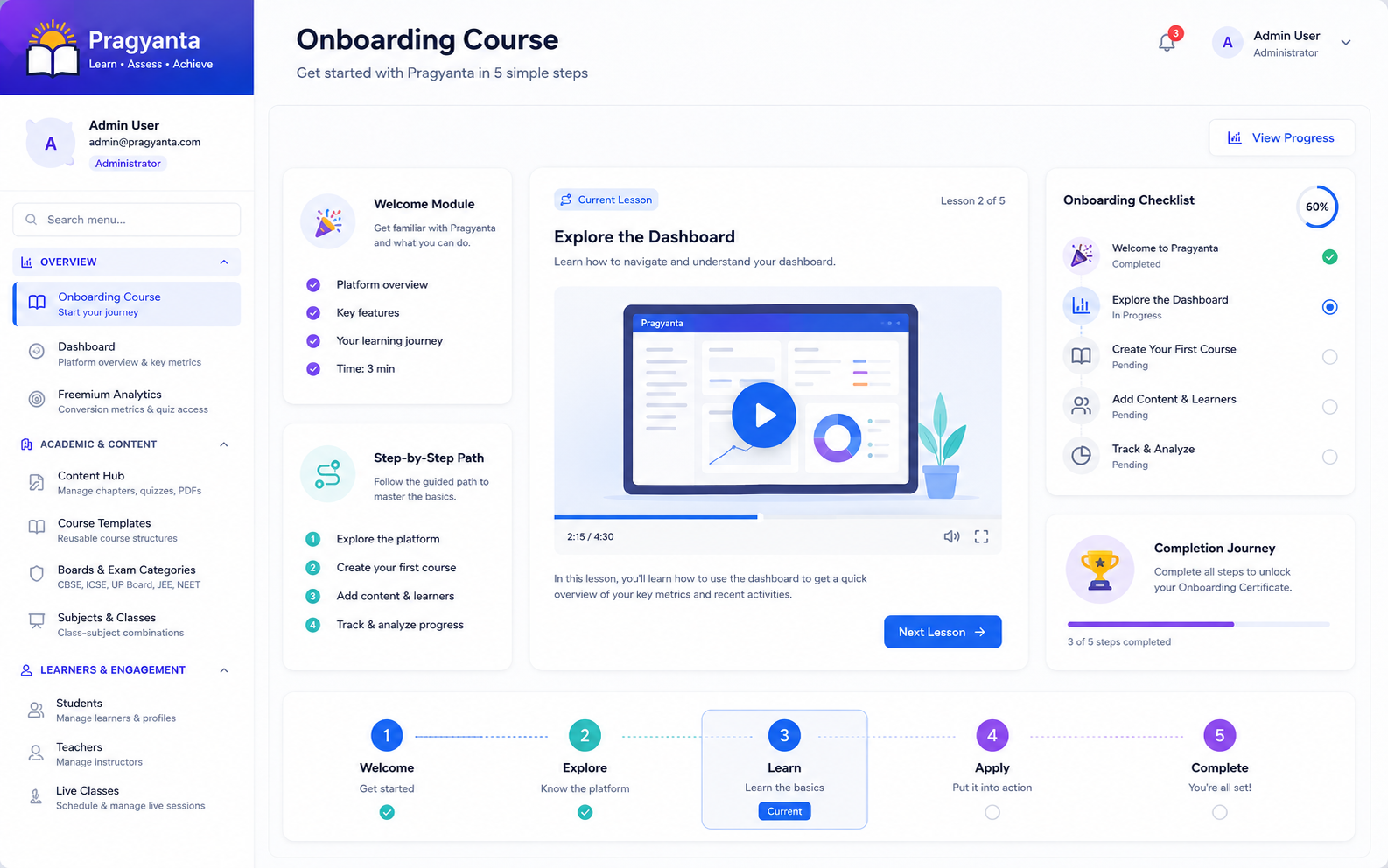
HR shouldn't have to email people asking if they've finished. That means progress dashboards and reporting that show, at a glance, who's started, who's stalled and who's done — plus automatic reminders and a certificate on completion so there's a record without manual follow-up.
Room to grow past day one
Onboarding is usually the first thing an organisation builds on a new LMS, not the last thing it needs. Look for a platform (or ask a vendor) that extends the same tracking and reporting to compliance refreshers, role-specific certifications and ongoing training later, rather than treating onboarding as a one-off microsite that gets rebuilt from scratch the next time training needs expand.
A quick self-check
If you're evaluating what you already have, three questions cut through most of it: can a new hire tell what they're supposed to do next without asking someone; does anyone other than the new hire know whether they've finished; and would the material still make sense to someone with no context, six months from now, when the person who wrote it has moved on. If the honest answer to any of those is no, that's usually the gap worth fixing first — before adding more content on top of a structure that isn't holding it.
See our onboarding course showcase — a worked example of exactly this structure — and the Employee Onboarding LMS service, or convert your onboarding into an LMS if what you have right now is still a folder of files and a spreadsheet.
Sources & Further Reading:
Google Search Central Documentation ·
Moz SEO Blog ·
Search Engine Land
Turn this article into a practical action plan
If this topic affects your site, campaign, or LMS growth path, we can help translate it into changes that actually fit your current setup.
Discuss This TopicFollow the related journey
Use the article as one step, then move into the service, portfolio, or broader blog context around it.