

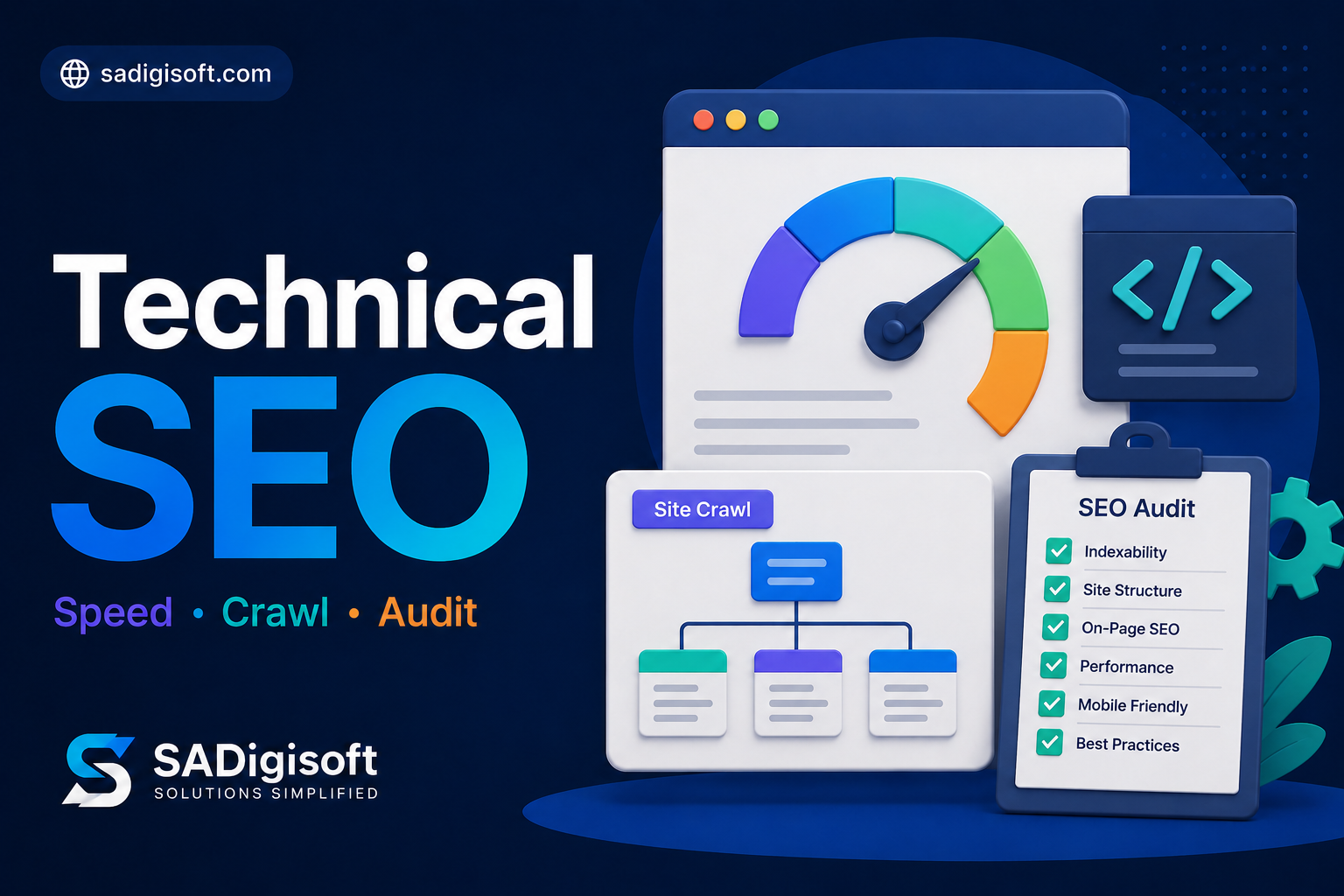
Technical SEO is the part of search optimisation that makes a website accessible, understandable, and reliable for search engines. A site can have strong messaging and useful content, but if important pages are hard to crawl, incorrectly indexed, or slow to load, performance will suffer.
What Technical SEO Covers
- Crawling and indexing
- Site architecture and internal navigation
- Redirect handling and canonical tags
- XML sitemaps and robots directives
- Structured data and page markup
- Performance, mobile usability, and security
Why It Matters
Technical SEO removes friction. It helps search engines reach important pages, understand which versions are canonical, and process the site more efficiently. It also helps users by supporting speed, stability, and clean journeys across devices.
Common Technical Problems
- Important pages excluded from the index
- Broken internal links or unnecessary redirect chains
- Duplicate or near-duplicate pages with weak canonical signals
- Bloated pages slowed down by heavy scripts or media
- Structured data missing from key business or article pages
Why Businesses Often Miss These Issues
Technical problems are often invisible in a quick visual review. A page may look fine in a browser while still sending mixed signals to search engines. That is why technical SEO audits are useful even on attractive and modern-looking sites.
Technical Improvements That Commonly Unlock Growth
In many audits, a few recurring fixes create disproportionate value: improving internal crawl paths to key pages, resolving duplicate versions, cleaning redirect chains, restoring indexability to important URLs, and adding missing schema to pages with strong business intent. None of these replaces content quality, but they often remove friction that has been holding good pages back.
When Technical SEO Is Not the Main Problem
Not every ranking issue is technical. If a site is crawlable and indexable but its pages still do not compete, the bigger problem may be weak positioning, thin content, or insufficient authority. Strong audits separate technical blockers from messaging and content gaps so teams can prioritize correctly.
Where to Start
Begin with the pages that matter most commercially. Check whether they are indexable, internally linked, fast enough on mobile, and free from avoidable duplication. Then review sitemap coverage, redirect hygiene, and schema opportunities across the wider site.
Final Thought
Technical SEO is not separate from content strategy. It is the foundation that allows content to be discovered and trusted. Without that foundation, good marketing pages can remain harder to find than they should be.
Sources & Further Reading:
Google Search Central Documentation ·
Moz SEO Blog ·
Search Engine Land
Turn this article into a practical action plan
If this topic affects your site, campaign, or LMS growth path, we can help translate it into changes that actually fit your current setup.
Discuss This TopicFollow the related journey
Use the article as one step, then move into the service, portfolio, or broader blog context around it.