

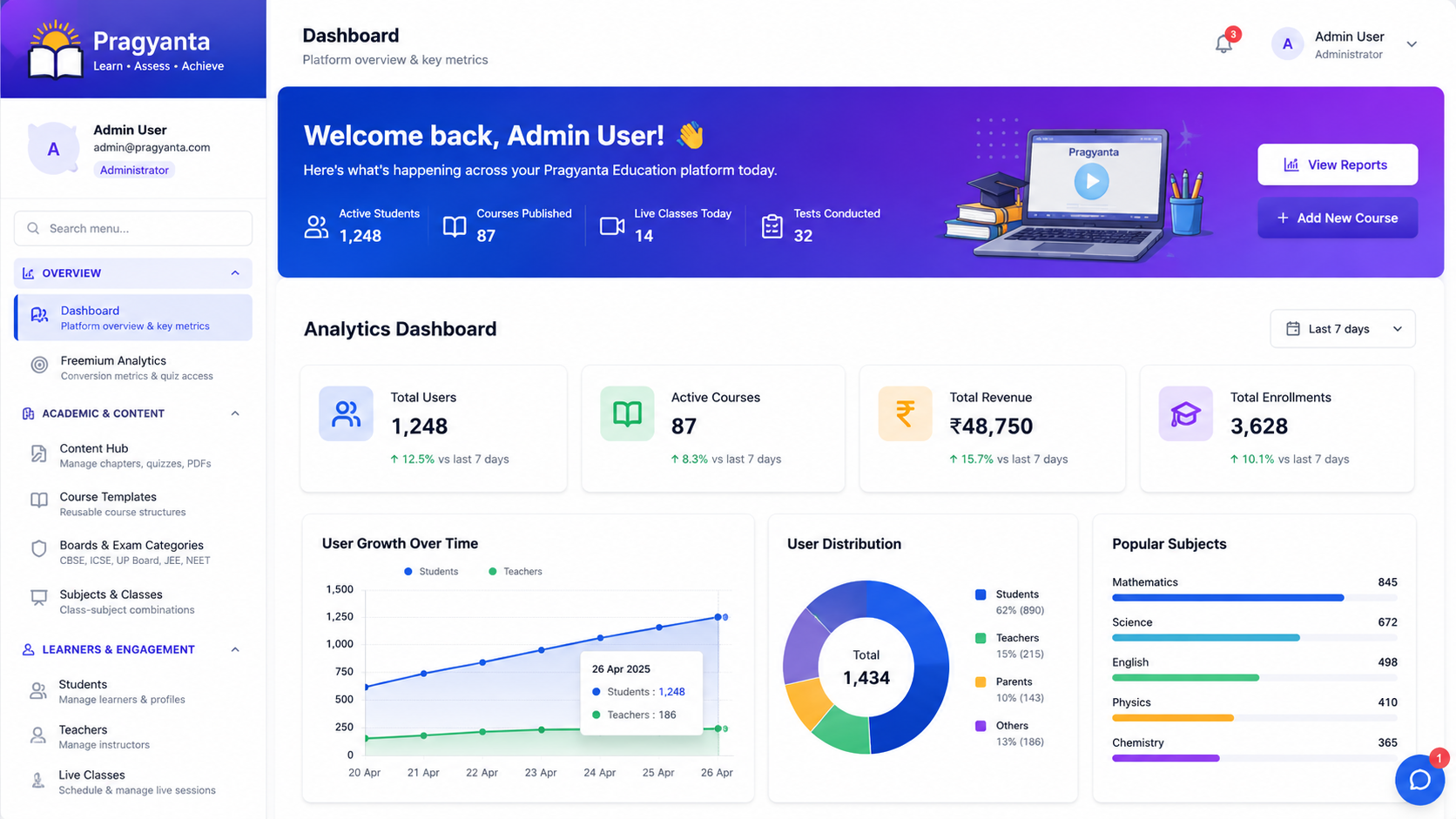

An MVP should be lean, but lean does not mean careless. The real goal of an MVP is not simply to launch quickly. It is to validate the product direction without creating avoidable technical drag that makes the next phase slower and more expensive than it should be.
What an MVP should prove
An MVP should prove that the product solves a meaningful problem for a real group of users. That means architecture should support learning and iteration. It does not need every enterprise feature on day one, but it should avoid decisions that make ordinary growth feel like a rewrite.
The foundations that usually belong in version one
- Clear frontend and backend boundaries - especially if the product will evolve into more than a static site.
- A sensible data model - enough structure that new features and reporting do not become painful immediately.
- Authentication and roles - if the product has different user types, it is better to shape that early than bolt it on later.
- Basic observability - logs, errors, and simple analytics so the team learns from real use.
- Deployment consistency - enough environment discipline that releases stay predictable.
What usually does not need to be overbuilt
Complex orchestration, premature microservices, extremely abstract architectures, and speculative scaling layers often do not belong in an early MVP. They solve risks that may never materialise while consuming time that should have gone into product learning.
Why scalability here means adaptability
At the MVP stage, scalability is not only about traffic. It is about whether the product can accept new workflows, new screens, new user roles, and better reporting without becoming structurally confused. An MVP that supports change well is already more scalable than one that simply handles moderate traffic.
How to think about the trade-off
The best MVP architecture choices usually feel proportionate. Enough structure to support growth, not so much structure that delivery slows before the market has taught you anything. That balance is where a good product team earns its keep.
Final thought
A scalable MVP is not one that tries to look like a mature enterprise platform. It is one that learns quickly now without making future growth unnecessarily expensive.
Sources & Further Reading:
Google Search Central Documentation ·
Moz SEO Blog ·
Search Engine Land
Turn this article into a practical action plan
If this topic affects your site, campaign, or LMS growth path, we can help translate it into changes that actually fit your current setup.
Discuss This TopicFollow the related journey
Use the article as one step, then move into the service, portfolio, or broader blog context around it.