

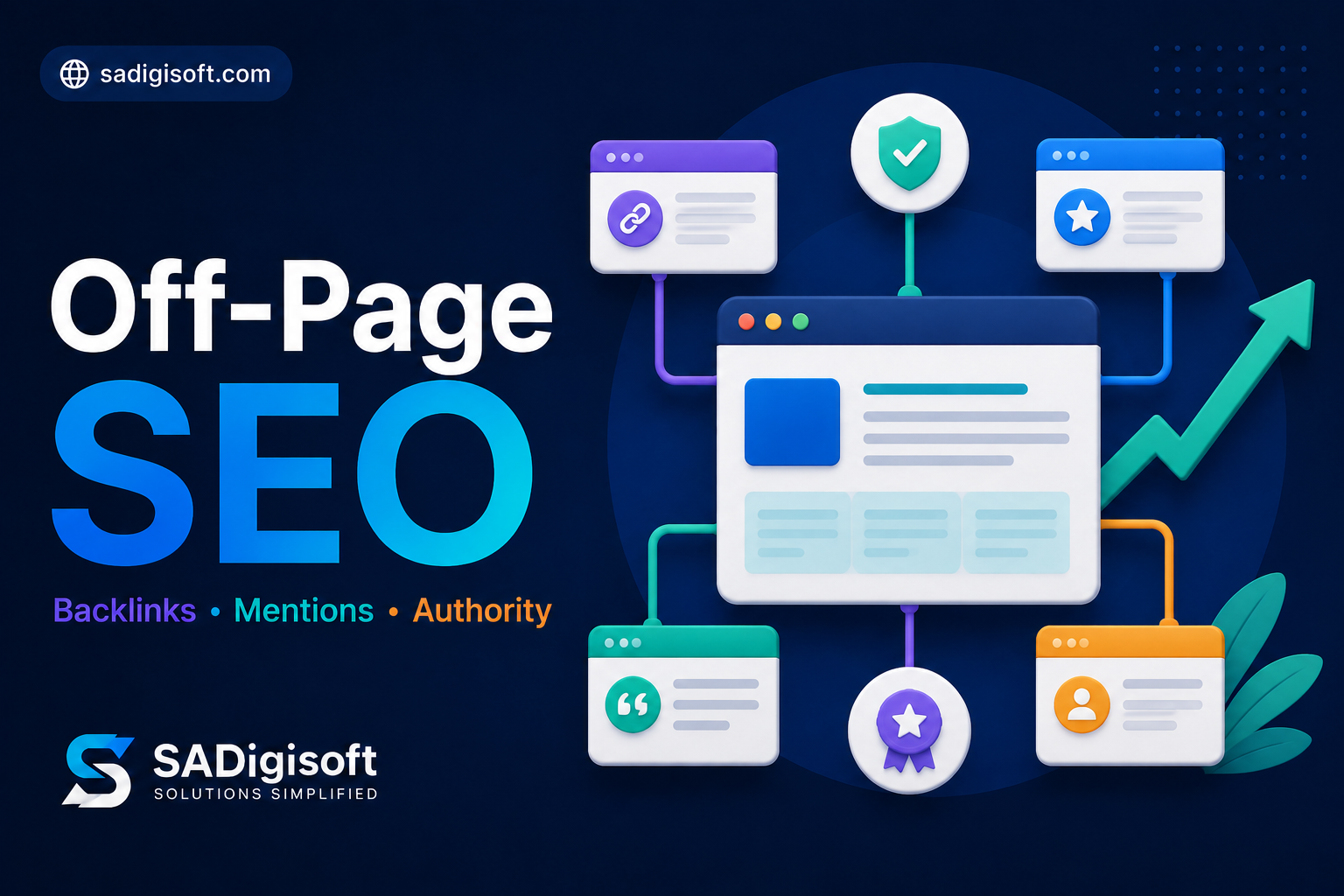
Off-page SEO refers to signals that happen beyond your website but still affect how visible and trustworthy your brand appears in search. The most familiar example is backlinks, but off-page SEO also includes mentions, reviews, listings, partnerships, and other forms of reputation building.
Why Search Engines Care About Off-Page Signals
A website can say anything about itself. Off-page signals help search engines understand whether the wider web sees that business as relevant, active, and credible. This is why authority is not built by content alone.
Backlinks Are Still Important, But Quality Matters
A link from a relevant, trustworthy website can strengthen the perceived authority of a page. A large number of weak or spammy links, however, adds very little value and can create risk. Good off-page SEO focuses on relevance, context, and editorial quality.
Off-Page SEO Includes More Than Links
- Brand mentions on industry sites
- Business directory profiles
- Google Business Profile signals
- Customer reviews
- Partnership announcements and PR coverage
- Guest contributions on relevant publications
What a Healthy Strategy Looks Like
Healthy off-page SEO is slow, credible, and aligned with the brand. It often grows from useful content, strong client work, thought leadership, local visibility, and genuine relationships. It does not rely on shortcuts or artificial link packages.
Why Brand Reputation Matters More Than Ever
Search visibility increasingly reflects broader trust signals. A business that is cited by relevant websites, reviewed positively, and represented consistently across the web sends a stronger quality signal than a site that exists in isolation. That does not mean every mention changes rankings directly, but together those signals support credibility.
Safer Ways to Build Off-Page Strength
- Publish useful resources worth referencing
- Turn strong project outcomes into case studies or announcements
- Contribute expert insight to niche publications or industry communities
- Keep local listings and social profiles accurate and active
Common Mistakes
- Buying large volumes of low-quality backlinks
- Using irrelevant directories just to create link numbers
- Ignoring review quality and local listing accuracy
- Publishing content with no outreach or distribution plan
Final Thought
Off-page SEO is best understood as digital reputation management with search impact. When respected sources mention, link to, and validate a business, search engines gain more reasons to trust it and users gain more reasons to choose it.
Sources & Further Reading:
Google Search Central Documentation ·
Moz SEO Blog ·
Search Engine Land
Turn this article into a practical action plan
If this topic affects your site, campaign, or LMS growth path, we can help translate it into changes that actually fit your current setup.
Discuss This TopicFollow the related journey
Use the article as one step, then move into the service, portfolio, or broader blog context around it.