

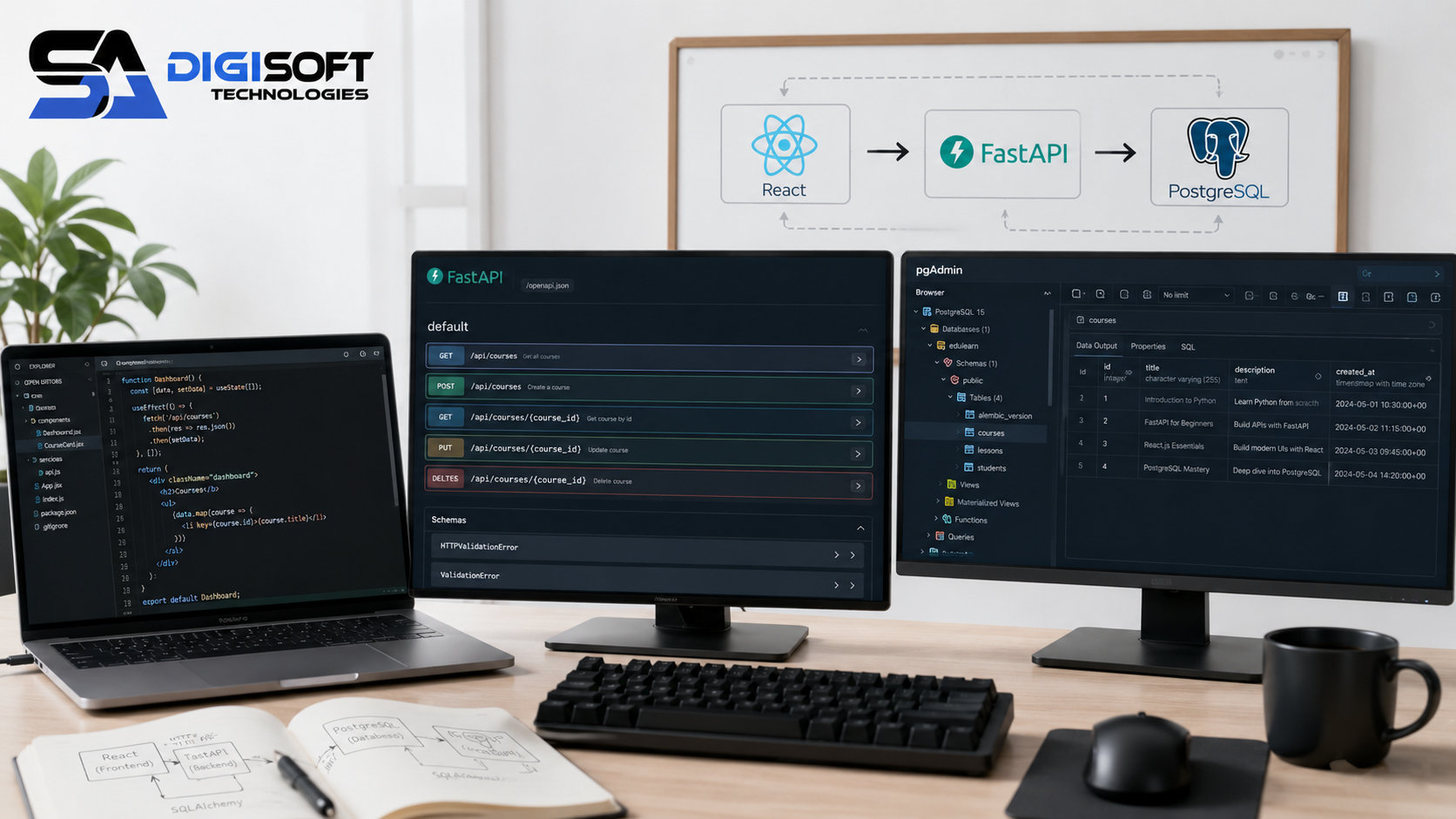
Technology stacks are often sold like fashion choices, but clients do not pay for fashion. They pay for systems that are fast, maintainable, scalable, and understandable by the team that has to live with them later. That is why we reach for React, FastAPI and PostgreSQL so often in serious product work.
Why React on the frontend
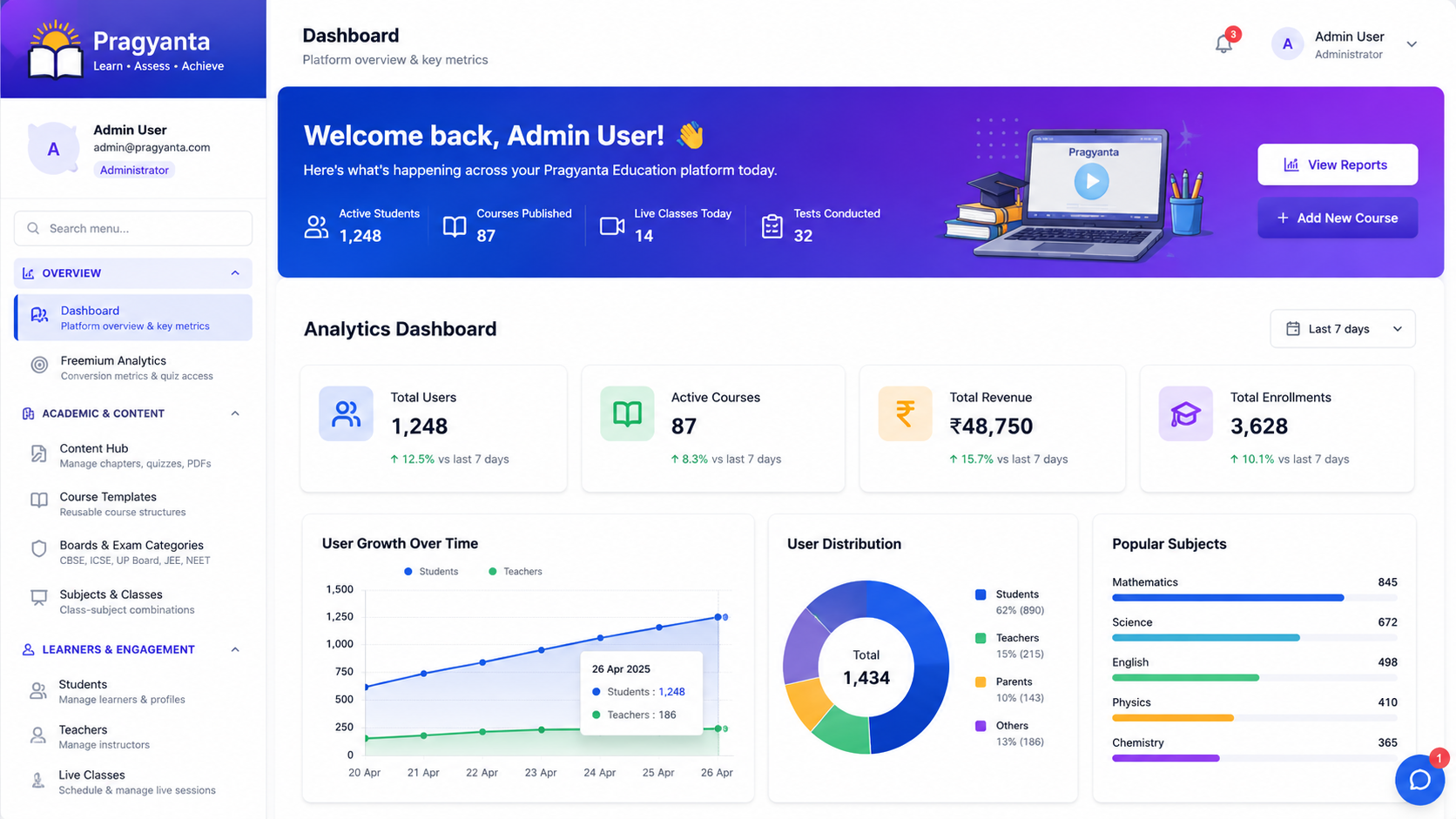
React is not attractive because it is trendy. It is attractive because it handles complex interfaces well. Dashboards, portals, LMS flows, admin panels, student progress views, multi-step forms, and data-heavy screens all benefit from a component model that keeps the interface organised as the product grows.
Why FastAPI on the backend
FastAPI gives us a backend that is clear, fast to build, and easy to reason about. Its request validation, OpenAPI generation, and Python-first developer experience make it a strong fit for APIs that sit behind custom frontends, internal tools, and modern SaaS-style products. It is especially useful when a platform may later need AI, automation, or analytics capabilities, because Python already lives comfortably in those worlds.
Why PostgreSQL underneath it
Real business software almost always outgrows simplistic data assumptions. Relationships get deeper, reporting gets harder, and edge cases multiply. PostgreSQL is strong because it is not just a place to store rows. It is a mature relational engine that handles constraints, indexing, JSON where needed, and real transactional integrity when the product gets serious.
Why these three work well together
- Clear separation of concerns - React owns the interface, FastAPI owns the application logic, and PostgreSQL owns the data truth.
- API-first structure - frontends, admin systems, partner tools, and mobile apps can all grow from the same backend foundation.
- Scalability without drama - each layer can be improved independently without rewriting the whole product.
- Strong fit for product-style work - dashboards, LMS products, reporting systems, custom portals, and business platforms all benefit from this balance.
Where Docker and deployment fit
This stack becomes even more practical when paired with containers, because local development, testing, and production environments stay more consistent. That is one reason it pairs naturally with the deployment choices discussed in our Docker and Kubernetes article.
What kind of clients this stack suits
It suits clients who need more than a brochure website. If the project needs authenticated users, reporting, workflows, dashboards, integrations, or evolving product logic, the stack starts to justify itself quickly. It is particularly effective for education products, business platforms, internal tools, and custom SaaS builds.
Final thought
We build with React, FastAPI and PostgreSQL not because they sound modern in a proposal, but because they stay useful as the product becomes more real. They support clean interfaces, structured backend logic, and data models that can survive growth without turning into a rescue project.
Sources & Further Reading:
Google Search Central Documentation ·
Moz SEO Blog ·
Search Engine Land
Turn this article into a practical action plan
If this topic affects your site, campaign, or LMS growth path, we can help translate it into changes that actually fit your current setup.
Discuss This TopicFollow the related journey
Use the article as one step, then move into the service, portfolio, or broader blog context around it.